© 2026 Wordle Hints. Not affiliated with The New York Times Company.
The 5 Best Starting Words for Wordle in 2026
Stuck?
It happens. One bad opener. Then panic. Then three guesses left.
Oops!
Your first word does a lot of work. It tests vowels. It tests common consonants. It helps you avoid dead-end patterns before they start. In 2026, with most regular players now a lot sharper, a weak opening word hurts more than ever.
So. Which starters actually help?
Checking the usual answer patterns. Verifying common letter frequency. Comparing what gives useful feedback fast. These five words still stand out for players who want a strong start without turning Wordle into homework.
Ready?
Let’s get into it.
Why the First Word Matters
Wordle is not just about guessing the answer. It’s about cutting the answer pool down. Fast.
A great opening word does three things:
That last part matters a lot. If your first word repeats a letter, you get less information back. Less coverage. Less clarity. More guessing later.
Think about two openers:
FUZZY can be fun. No question. But it burns a guess on repeated Z and uses uncommon letters. If the puzzle does not contain those letters, you learn almost nothing useful.
SLATE? Better. You check five common letters at once. You get cleaner feedback. More paths open up.
That’s the goal. Not magic. Information.
People often call this entropy. Simple version? The more useful feedback your first guess creates, the easier the next guess becomes.
And that is how streaks survive.
1. SLATE: Best All-Around Starter
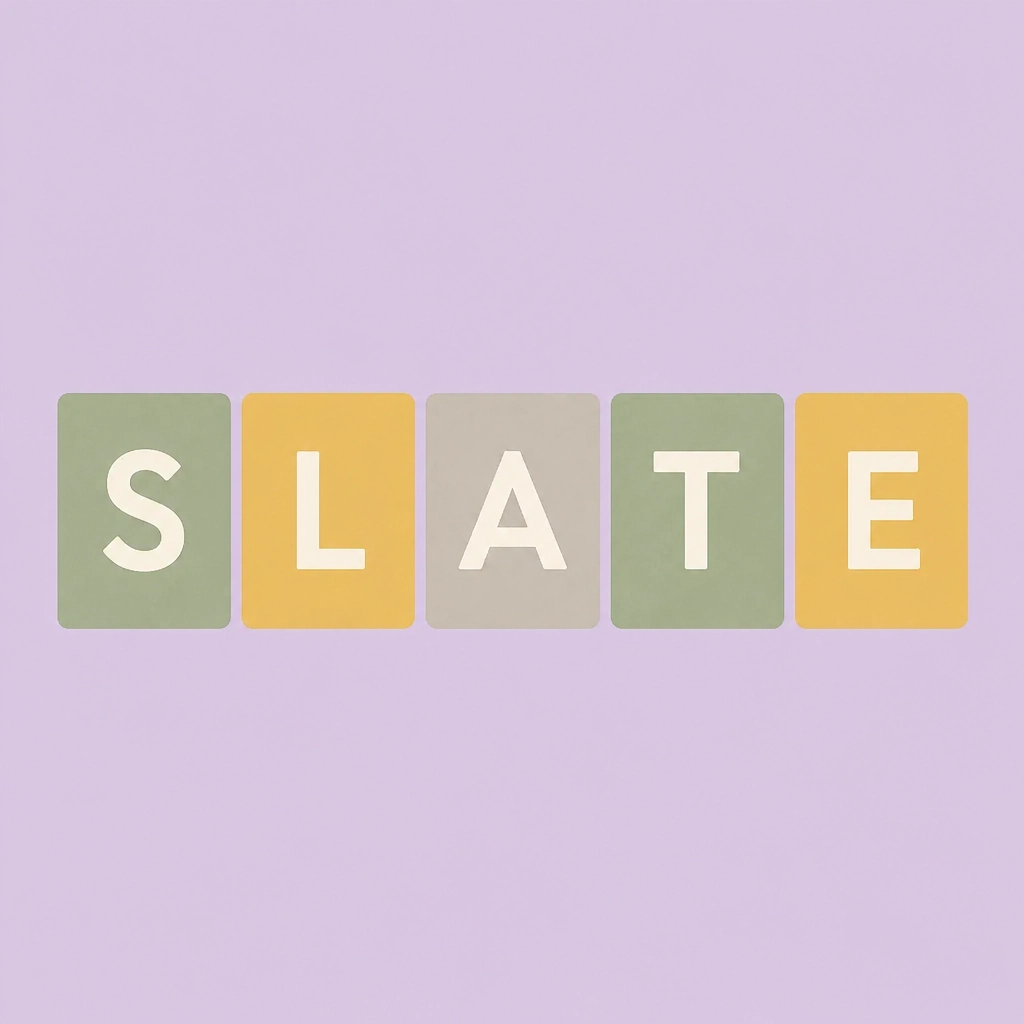
If you want one safe, sharp, dependable opener, start here.
SLATE keeps showing up for a reason. It covers:
That mix is tough to beat.
SLATE is also flexible. If you hit one green and one yellow, you usually already have enough structure for a strong second guess. If you hit nothing? You still eliminated five popular letters. That is not failure. That is progress.
Why players like it:
Stuck after SLATE? That’s where a tool like Wordle Vibe helps. Drop in the colors. See how many answers remain. Keep the challenge. Lose the guesswork.
2. CRANE: Best for Balanced Coverage
CRANE has been a favorite for years. Still good. Still reliable.
There’s a reason WordleBot has long liked this kind of opener. The word feels balanced because it is balanced. You get:
The shape matters too. CRANE tends to produce practical feedback on both letter presence and likely placement. It is especially helpful when the answer leans toward common everyday word structures.
What makes CRANE good is not just raw frequency. It’s versatility. The feedback often leads to a natural second guess without forcing awkward plays.
Choose CRANE if you like:
Not flashy. Just effective.
3. SALET: Best for Pure Math Players
Want the spreadsheet answer?
Here it is.
SALET has been praised in statistical analyses because it squeezes a huge amount of information out of one guess. It uses the same core letters players already love, just arranged in a way that can improve average narrowing in some simulations.
That does not mean it always “feels” better than SLATE. Important difference.
SLATE feels natural to many players because it looks like a normal everyday word. SALET feels a little odd. But Wordle allows it, and the letter set is excellent:
All high-value. No wasted slot.
So why isn’t everyone using it?
Simple. Many players prefer a word they can instantly build off without thinking about whether the opener itself feels unusual. But if your goal is pure efficiency, SALET deserves a spot near the top.
Best for:
4. TRACE: Best for Consistent Second Guesses
TRACE does not always get the same hype. It should.
This word gives you a very playable mix:
That combination is great for revealing common structures early. TRACE is especially nice if your second-guess strategy depends on quickly identifying whether the answer uses a familiar ending or a strong consonant frame.
Why TRACE works:
It also plays nicely in Hard Mode because the clues tend to be easy to reuse. You are less likely to end up with a weird forced guess compared with some vowel-heavy starters.
If SLATE feels too common and ADIEU feels too narrow, TRACE sits in a nice middle lane.
Calm. Useful. Strong.
5. ADIEU: Best for Vowel Checking
Love vowels?
You’re not alone.
ADIEU remains one of the most popular opening words because it checks four vowels immediately:
That can feel amazing when the puzzle contains multiple vowels. You get instant direction. You stop wondering whether the answer is vowel-light or vowel-heavy.
But there’s a tradeoff.
ADIEU spends four of five slots on vowels, which means it gives up some consonant coverage. In many Wordle puzzles, consonants do just as much work as vowels when it comes to narrowing possibilities.
So is ADIEU the “best” mathematical opener? Usually no.
Is it still a very usable strategic choice? Absolutely.
Pick ADIEU if you:
It is not the top all-around pick. But it is still one of the best specialist openers in 2026.
Strategy: Hard Mode vs. Normal Mode
Playing Hard Mode?
Then your first guess matters even more.
In Hard Mode, every confirmed clue must be used on later guesses. That means a sloppy opener can trap you fast, especially inside dangerous clusters like:
Yikes.
A strong starting word helps you avoid that. Words like SLATE, CRANE, and TRACE are strong here because they reveal structure without boxing you in too early.
Normal Mode gives you more freedom. You can use a second guess purely for elimination if needed. Hard Mode does not always let you do that.
So if you mostly play Hard Mode, lean toward openers with broad consonant coverage and no gimmicks.
How to Recover from a Bad Start

Bad first guess?
It happens.
Say you open with ADIEU and get almost nothing back. Annoying. But useful too. Now you know several vowels are gone. That changes the board.
Your second guess should do one job: test fresh, common letters.
Good follow-up ideas depend on feedback, but the rule is simple:
Think words like STORY, CLONT-style coverage words if valid, or other broad testers that hit untouched letters. The exact word matters less than the principle.
Keep learning. Keep narrowing.
And if you are staring at the grid with zero ideas? Use Wordle Vibe. Enter the colors. See the count. Get the best next guesses ranked by useful letters, not just random possibilities.
That saves streaks.
Without fully spoiling the fun.
The Verdict
If you want one best starting word for most players in 2026, go with SLATE.
If you want options, here’s the full short list:
Start smart. Adjust fast. Don’t chase fancy words just because they look clever.
More information early usually means fewer problems late.
That’s the game.